Global Markets

Explore global energy markets in one place. The live Brent crude oil tracker is embedded below, with dedicated country experiences for South Africa and deep dives into the geopolitical tensions shaping energy between the USA, Iran, and South Africa coming soon.

Live now

Global Markets

Active

Brent crude tracker + geopolitical tensions (current page).

Next release

South Africa

Coming soon

SA-focused energy dashboard/experience.

Next release

United States

Coming soon

USA-focused energy dashboard/experience.

Brent Crude Oil Analysis

Tip: scroll within the embedded dashboard below to view the full content.

Global Markets Articles

Latest publications in the Global Markets category.

The Petrodollar at War: Oil, Dollar Hegemony, and the Fractures Opened by the Closure of the Strait of Hormuz

The Petrodollar at War: Oil, Dollar Hegemony, and the Fractures Opened by the Closure of the Strait of Hormuz

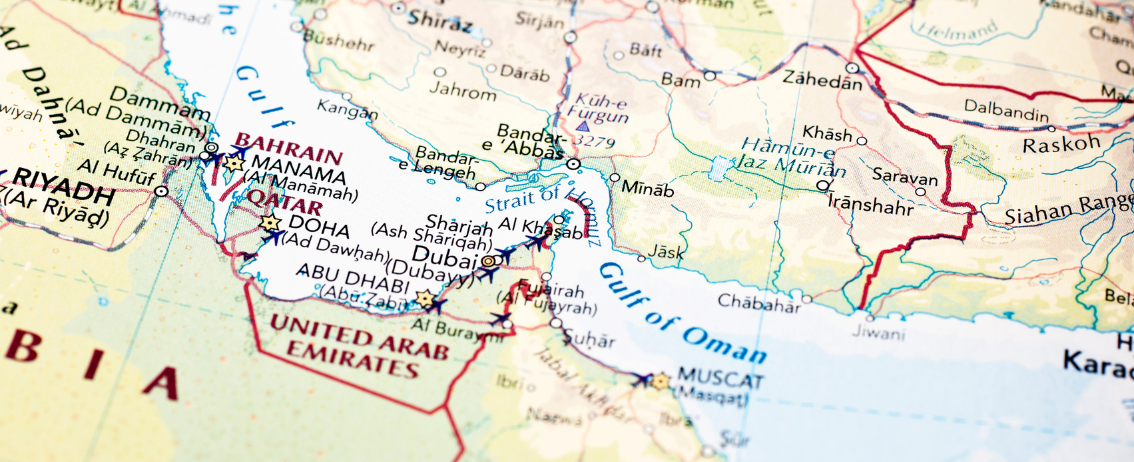
The petrodollar system, constructed in 1974 on a bilateral agreement between Washington and Riyadh, has underwritten five decades of American financial primacy. By denominating global oil trade in U.S. dollars and recycling petroleum revenues into U.S. Treasury securities, it created a structural demand for the dollar that outlasted the gold standard and survived every geopolitical shock from the Cold War to the Global Financial Crisis. The 2026 U.S.-Israel-Iran war and the resulting closure of the Strait of Hormuz now constitute the most direct challenge to that system since its inception. Iran's selective passage policy -- permitting Chinese-affiliated tankers to transit on payment in Chinese yuan -- has introduced a live experiment in de-dollarised oil trading through the world's most critical energy chokepoint. This article traces the architecture of the petrodollar system, examines the mechanics by which the Hormuz closure strains it, and assesses the structural implications for dollar hegemony, emerging market economies, and the global financial order.
War Consequence Snapshots: Early Impacts of the U.S.–Israel–Iran Conflict on Global Energy

War Consequence Snapshots: Early Impacts of the U.S.–Israel–Iran Conflict on Global Energy

The following entries are drawn from LinkedIn commentary and institutional research published in March 2026. They represent early-stage thinking on likely consequences of the Middle East conflict — particularly the closure of the Strait of Hormuz and the destruction of Qatari LNG infrastructure. These are working notes intended to inform future full articles and quantitative analysis. Source attribution is included for each entry.

Storage as Security: Rethinking South Africa’s Liquid Fuels Resilience

Storage as Security: Rethinking South Africa’s Liquid Fuels Resilience

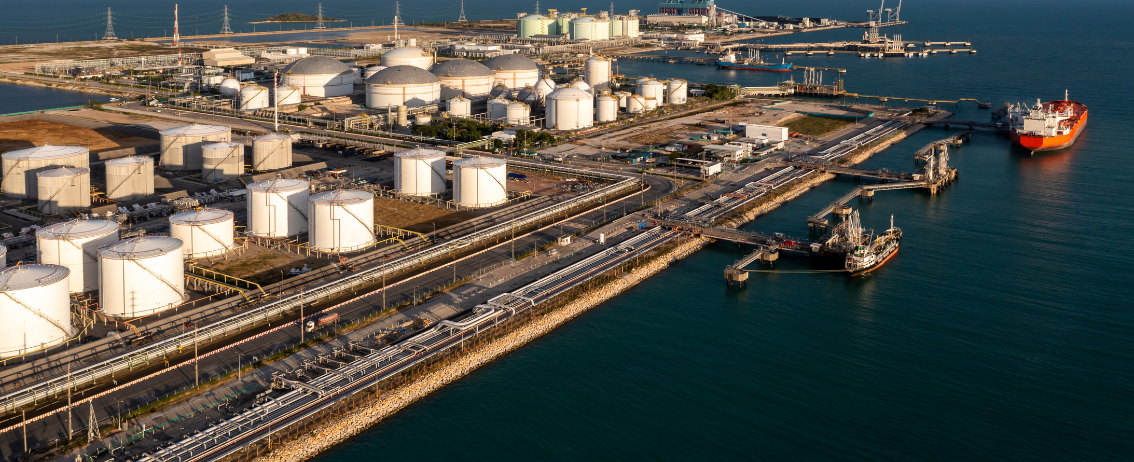
The question is no longer how much crude can be processed domestically. It is how much refined product can be absorbed, stored, and redistributed without disruption. In an import-led system, storage defines stability. Tank capacity determines how many days of supply can be maintained if cargo arrivals are delayed. Geographic distribution determines whether supply shocks remain localised or propagate across the system. If storage capacity is insufficient relative to import volumes and demand concentration, the system operates with minimal elasticity. External volatility translates quickly into domestic constraint. Energy security can therefore no longer be framed solely in terms of refining capacity, but must be assessed against refined product import dependency, days-of-cover, and the geographic distribution of storage relative to inland consumption.

South Africa at the Cape of Crisis: Energy Geopolitics, Middle East Conflict, and the Reconfiguration of Global Trade Routes

South Africa at the Cape of Crisis: Energy Geopolitics, Middle East Conflict, and the Reconfiguration of Global Trade Routes

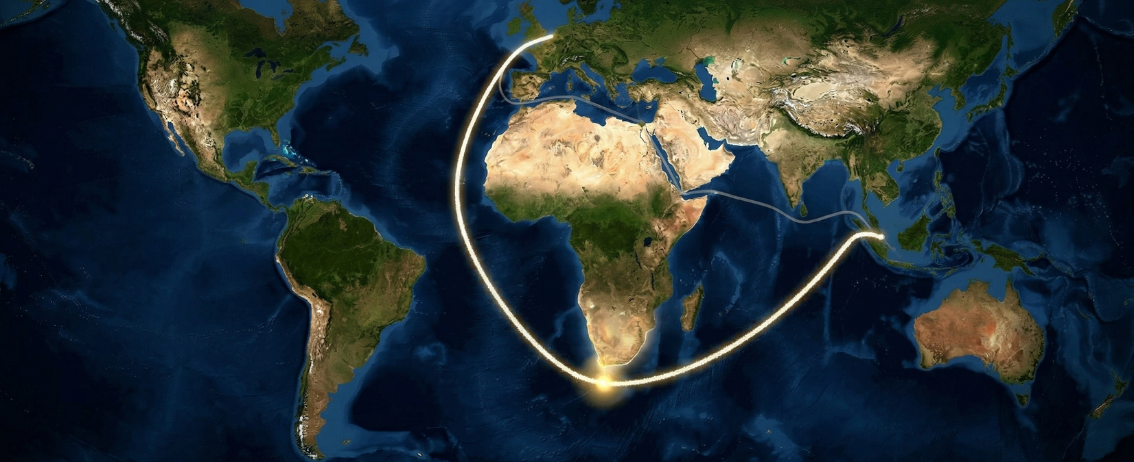
This working paper examines how the compound disruption of Middle Eastern energy and shipping corridors between December 2023 and March 2026 has reconfigured global trade routes and elevated South Africa’s strategic significance. It argues that persistent Houthi interdiction in the Red Sea, the closure of the Strait of Hormuz, and QatarEnergy’s force majeure following attacks on Ras Laffan should be understood not as isolated shocks, but as a cumulative geopolitical rupture that has weakened the Suez–Hormuz corridor and restored the Cape of Good Hope as a critical artery of global energy circulation. Using a scenario-based spatial model developed in Python and GeoPandas, calibrated against ONS ship-crossings data, IMF PortWatch chokepoint data, and UNCTAD maritime statistics, the paper maps the rerouting of oil, LNG, and container traffic under crisis conditions. It introduces the South Africa Strategic Exposure Index (SASEI) as an original measure of the country’s maritime significance, showing that South Africa’s strategic exposure under the March 2026 crisis scenario rises to roughly three times its 2022 baseline. The analysis finds that South Africa is increasingly positioned at the convergence of rerouted Asia–Europe shipping, Atlantic-to-Asia replacement LNG flows, and diversified refined-product supply chains. The paper argues that this shift creates both opportunity and vulnerability. South Africa can emerge as a major corridor service hub for bunkering, logistics, and green maritime fuels, but only if it addresses port inefficiencies, expands energy and bunkering infrastructure, and maintains geopolitical credibility in a fragmented international system. The paper concludes that South Africa’s response to the return of the Cape route will shape not only its own energy security and economic trajectory, but also its wider role in twenty-first-century energy geopolitics.